Executive Summary

Transportation

Yes, regional growth brings real infrastructure and congestion challenges.

And our comprehensive transit ecosystem keeps the Front Range moving forward.

Growth brings traffic, and expanding regions must have transportation systems that accommodate those helping propel it forward. As the Front Range expands and roads get busier, business leaders rightfully evaluate commute times, connectivity, and whether our infrastructure can keep pace.

But transportation along the Front Range is one of the region’s biggest priorities. Through proactive regional collaboration, infrastructure investments, and innovative mobility hubs, our transit system is actively adapting to meet the demands of a robust economy.

This chapter dives into the data, projects, and multi-modal networks that connect our workforce to jobs and our businesses to the world.

What's Inside?

Shorter Commutes Than National Competitors

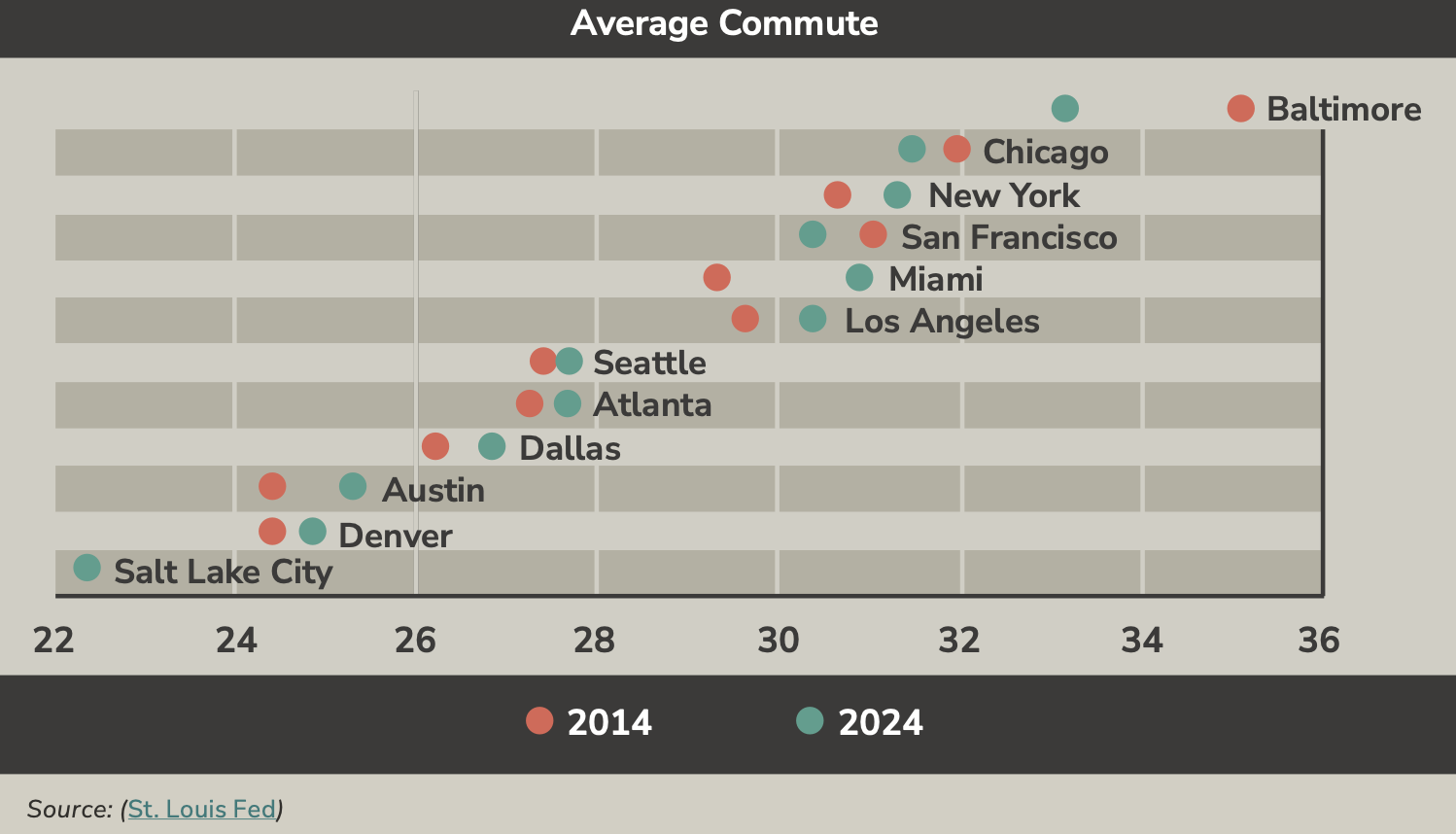
The I-25 highway handles up to 289,000 vehicles daily through central metro Denver. Despite recent growth, commute times across the metro area remain significantly lower than in most major metropolitan areas nationwide. Denver's mean commute is just shy of 25 minutes, which is lower than average for other metropolitan cities.

Inside, we unpack commuter data from the Federal Reserve Bank of St. Louis and the Denver South Commuter Survey to show how local travel times compare to coast-to-coast business hubs.

Read more: Shorter Commutes Than National Competitors
Source: Federal Reserve Bank of St. Louis

59 Local Governments, One Regional Economy

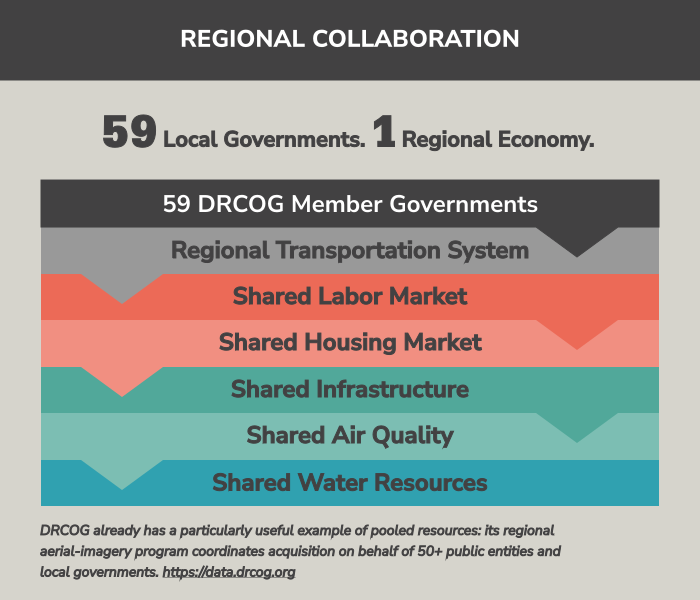
Solving mobility takes a collaborative approach. The Denver Regional Council of Governments (DRCOG) unites local member governments to manage a shared regional economy, infrastructure, and transportation plan.

With over $49 million invested in regional transit and infrastructure projects for 2027 and cross-jurisdictional mobility hubs like the Lone Tree Mobility Hub, the Denver South region seamlessly integrates Bustang, local shuttles, passenger rail, and scootering and biking options. This chapter details exactly how governments and regional efforts work hand in hand to build smart mobility options and expand highway corridors.

Read More >>

Beyond the Single-Occupant Vehicle

Cars are not the only transportation option here. The Front Range is actively investing in transit alternatives that reduce vehicles on the road and give employees modern ways to commute.

Inside, discover how multi-modal transit options are helping local employers offer seamless, flexible commuting options to their teams.

Read More: Beyond the Single-Occupant Vehicle
  • Regional Transit Network: RTD provides bus and light rail services across 40 municipalities in six counties, anchored by 57 light rail stations connecting urban cores, suburban business parks, and Denver International Airport.
  • First- and Last-Mile Mobility: Micro-mobility programs are flourishing, with 75% of shared micro-mobility trips in the metro area under 1.5 miles.
  • Localized Innovations: Programs like the Regional E-Bike Share Program, Denver South’s Spin scooter program, and Douglas County’s free Link on Demand shuttle address key transit gaps.

Direct Access to Global Markets

Whether flying across the country or shipping products globally, Front Range businesses operate with world-class air connectivity.

Denver International Airport (DEN): The 4th busiest airport in the U.S. and 10th busiest globally, with 236 nonstop destinations (and 35 international routes across 19 countries).

Centennial Airport (APA): One of the busiest general aviation airports in the world, offering 24/7 FAA control, 24/7 U.S. Customs clearance, and dedicated corporate travel infrastructure.

Colorado Springs Airport (COS): Undergoing a $63 million concourse and amenities makeover after serving 2.4 million passengers in 2025.

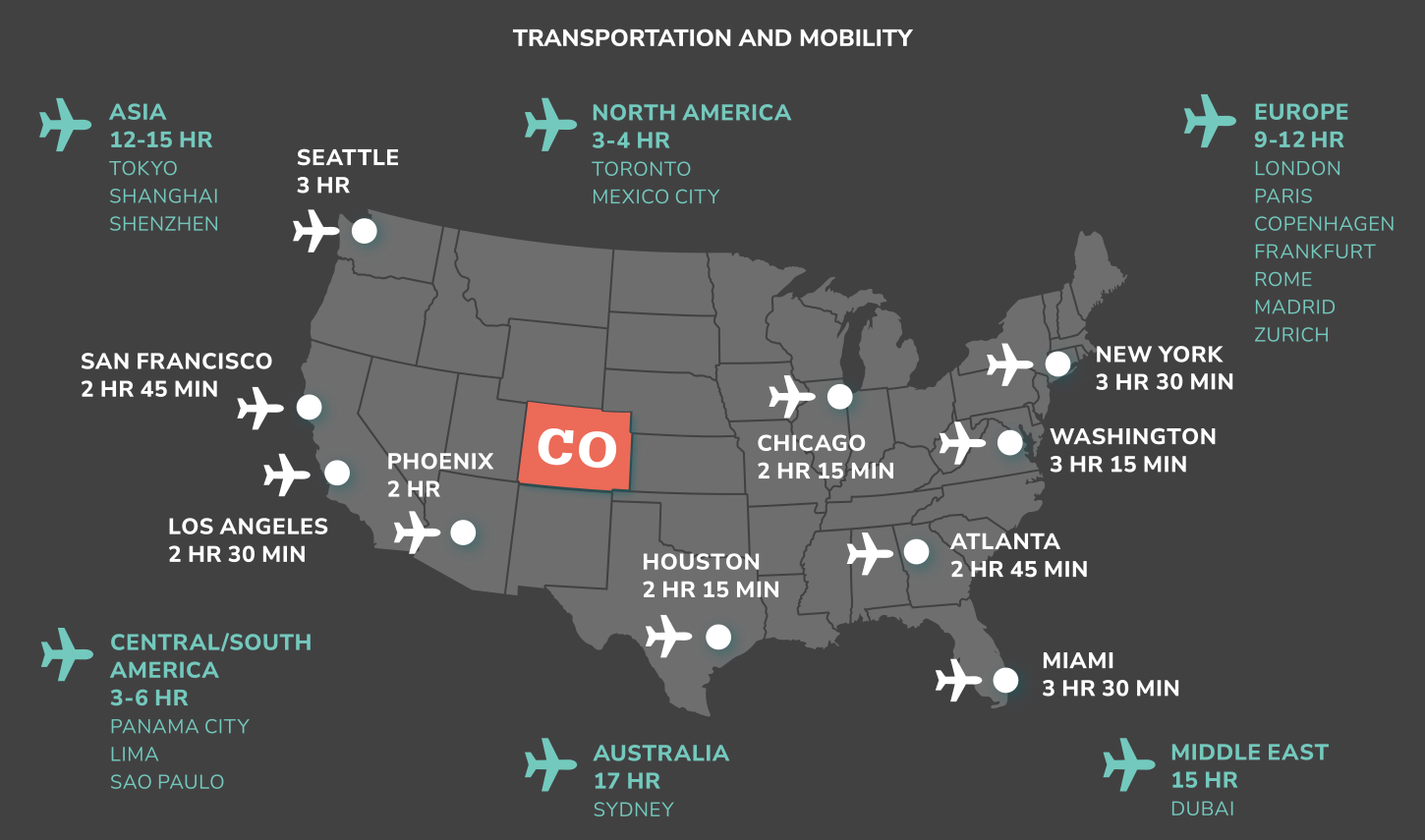
Inside, we explore flight-time breakdowns to major commercial hubs and see how local airport expansions keep Colorado connected to global opportunity.

Read More: Direct Access to Global Markets

Evaluating corporate expansion, logistics, or talent accessibility requires a clear view of how seamlessly people and resources can move. This chapter delivers the infrastructure data and regional transit outlook you need to make confident location decisions.

Yes, growth brings transit challenges.

And on Colorado’s Front Range, proactive regional solutions keep your business connected.